Synopsis
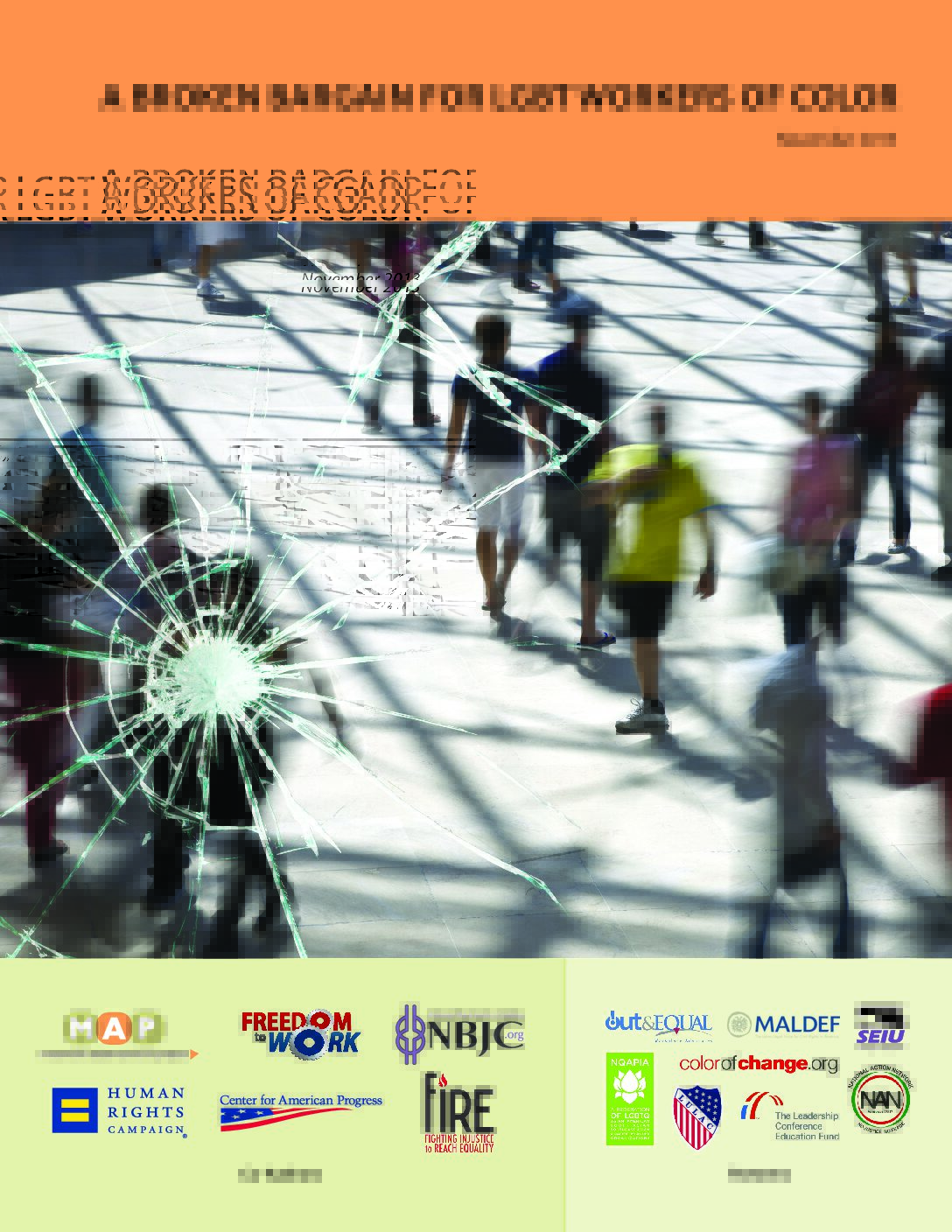
This report examines how LGBT workers of color face unique challenges related to their race and ethnicity and their sexual orientation and/or gender identity. In particular, LGBT workers of color are hindered by three major barriers: educational barriers; hiring bias and on-the-job discrimination; and unequal pay, benefits, and taxation. As a result, LGBT people of color are some of the most disadvantaged workers in the United States—and face extraordinarily high rates of unemployment and poverty.
“Instead of having a fair chance to get ahead, LGBT workers of color often are held back by a combination of barriers that adversely affect their ability to get a quality education and find good, family-supporting jobs in workplaces that are free of discrimination. While it can be hard to identify exactly how the forces of bias and prejudice based on race, sexual orientation and gender identity intersect, the fact is that they do so to the detriment of LGBT workers of color, making them some of the most disadvantaged workers in the U.S. workforce”
Lesbian, gay, bisexual, and transgender (LGBT) workers of color are among the most disadvantaged workers in America. Due to discrimination coupled with a lack of workplace protections, unequal job benefits and taxation, and unsafe, under-resourced U.S. schools, LGBT people of color face extraordinarily high rates of unemployment and poverty.
A Broken Bargain for LGBT Workers of Color, a companion to the recently released report, A Broken Bargain: Discrimination, Fewer Benefits, and More Taxes for LGBT Workers, is co-authored by the Movement Advancement Project (MAP), the Center for American Progress (CAP) and its FIRE Initiative, Freedom to Work, the Human Rights Campaign (HRC), and the National Black Justice Coalition (NBJC), in partnership with ColorofChange, the Leadership Conference Education Fund, League of United Latin American Citizens (LULAC), Mexican American Legal Defense and Educational Fund (MALDEF), the National Action Network, the National Queer Asian Pacific Islander Alliance (NQAPIA), Out and Equal Workplace Advocates, and SEIU.